The Quiet Medicine of Growing Things
How Plants Support Everyday Well-Being
There is something wonderfully grounding about caring for a living plant.
It doesn’t need to be an enormous vegetable garden or an impressive collection of rare houseplants. Sometimes it is one pot of rosemary on the porch, a pothos trailing across a bookshelf, or a basil plant sitting in the kitchen window.
You water it.
You notice a new leaf.
You turn the pot toward the light.
You brush against the rosemary and catch that unmistakable fragrance on your fingers.
For a moment, whatever else is demanding your attention moves quietly into the background.
That simple interaction is one reason I have always believed plants deserve a place in conversations about wellness.
Not because every plant needs to become a remedy.
Not because gardening must become another health program.
But because living alongside plants encourages us to slow down, observe, nurture and reconnect with the natural world.
And those are things many of us could use a little more of.
We Were Never Meant to Live Entirely Apart From Nature
Modern life makes it remarkably easy to go through much of a day without interacting with the natural world.
We move from house to car to building.
We look at screens.
We regulate the temperature around us.
We buy food already harvested, cleaned and packaged.
None of those things are inherently bad. They make life enormously easier.
But they can also create a strange separation between us and the rhythms that once shaped everyday human life.
Plants quietly bring some of those rhythms back.
They respond to sunlight.
They respond to temperature.
They grow quickly during some seasons and rest during others.
They sometimes thrive.
They occasionally sulk.
And despite everything the plant-care books tell us, they don’t always behave exactly as expected.
That alone can be a useful reminder.
Nature isn’t perfectly controlled.
Neither are we.
The Wellness Benefit May Be in the Doing
When we talk about plants and health, people often immediately think of herbal remedies.
As an herbalist, I certainly understand why.
Plants have a long history of traditional use, and many modern medicines themselves have roots—quite literally or historically—in plant chemistry.
But there is another relationship with plants that deserves attention.
The act of caring for them.
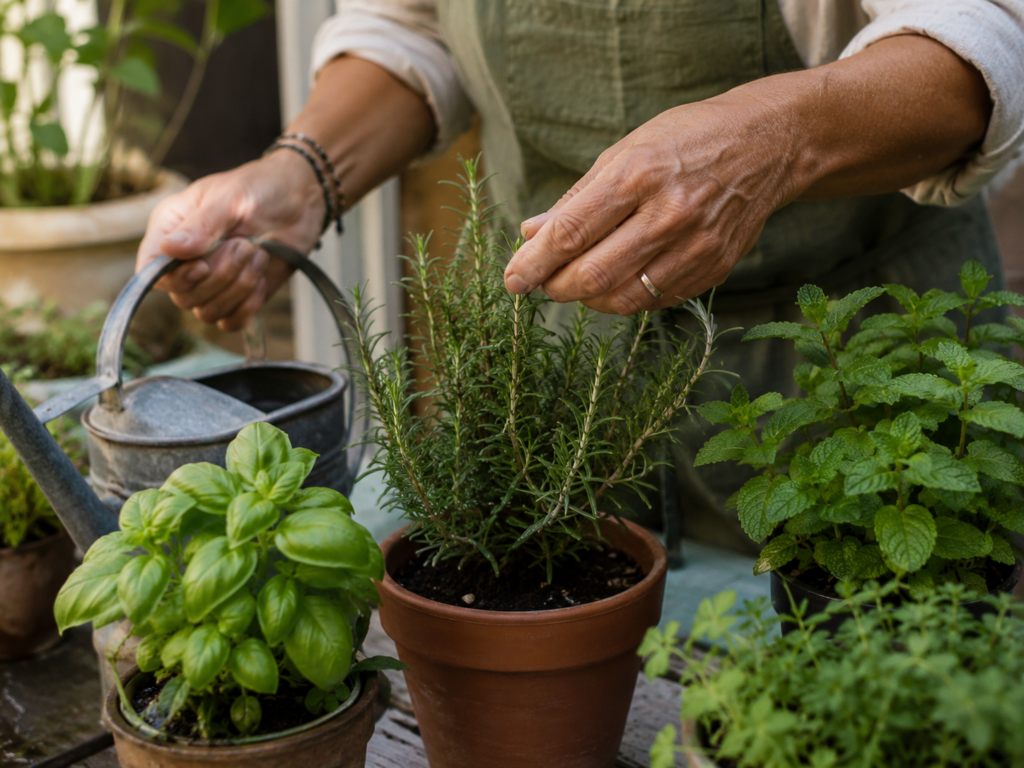
Gardening and plant care invite small, purposeful movements.
You walk outside.
You bend or reach.
You carry a watering can.
You trim something.
You repot.
You pull a weed.
You harvest a handful of herbs for dinner.
None of this needs to be strenuous.
In fact, for someone living with fatigue, chronic discomfort or reduced mobility, plant care can be adapted remarkably well.
Containers can be raised.
Tools can have longer handles.
Gardening can be done sitting down.
Indoor plants can bring much of the pleasure of tending something living into a very small space.
This is one reason I resist the idea that movement only “counts” when it happens during formal exercise.
Our bodies were designed to move throughout life—not simply during a designated workout.
Plants Teach Observation
One of the most useful skills a gardener develops is learning how to look.
Really look.
A beginning gardener often sees a drooping plant and immediately thinks:
“It needs water!”
And then gives it water.
Experienced gardeners become a little more suspicious.
Is the soil actually dry?
Has the plant been overwatered?
Is the afternoon heat causing temporary drooping?
Did it recently get transplanted?
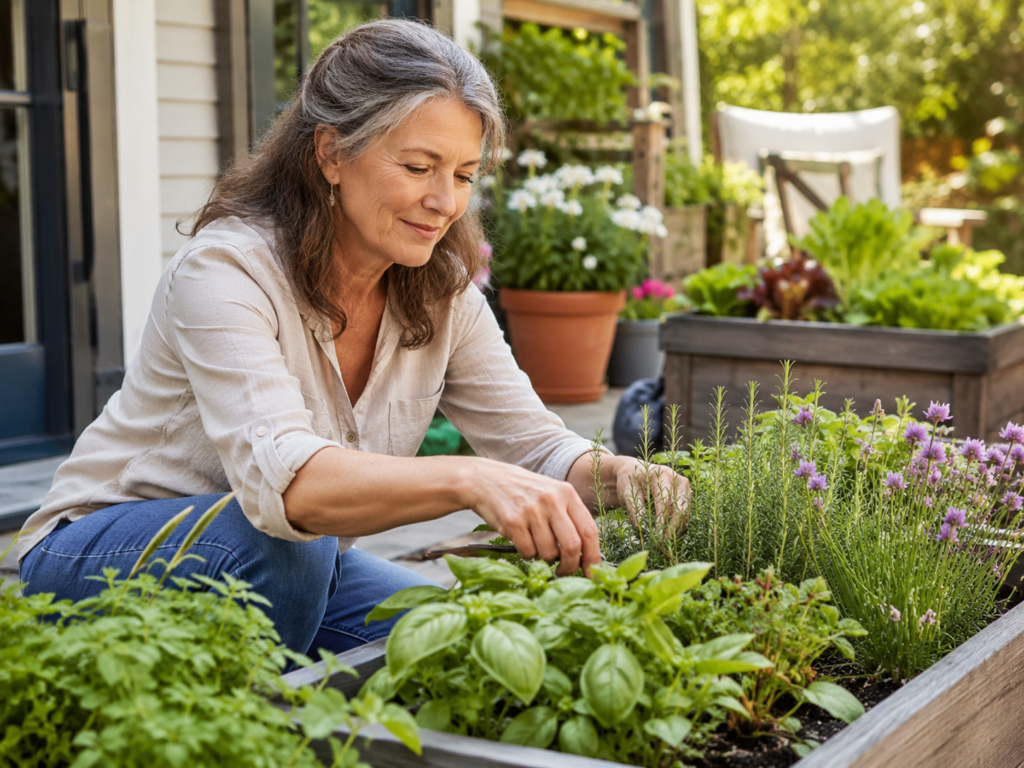
Has the light changed?
Are there insects hiding underneath the leaves?
The plant teaches us to observe before reacting.
That principle reaches well beyond gardening.
Our bodies give us information too.
Fatigue is information.
Hunger is information.
Tension is information.
Restlessness is information.
A difficult night’s sleep is information.
None of those signals automatically tells us the entire answer. But they give us something to notice.
Learning to observe ourselves without immediately judging what we discover can be an important part of caring for ourselves well.
Plants offer wonderful practice.
One Plant Can Change a Room
There is another reason I encourage people who are curious about plants to start small.
A single healthy plant can change the feeling of a space.
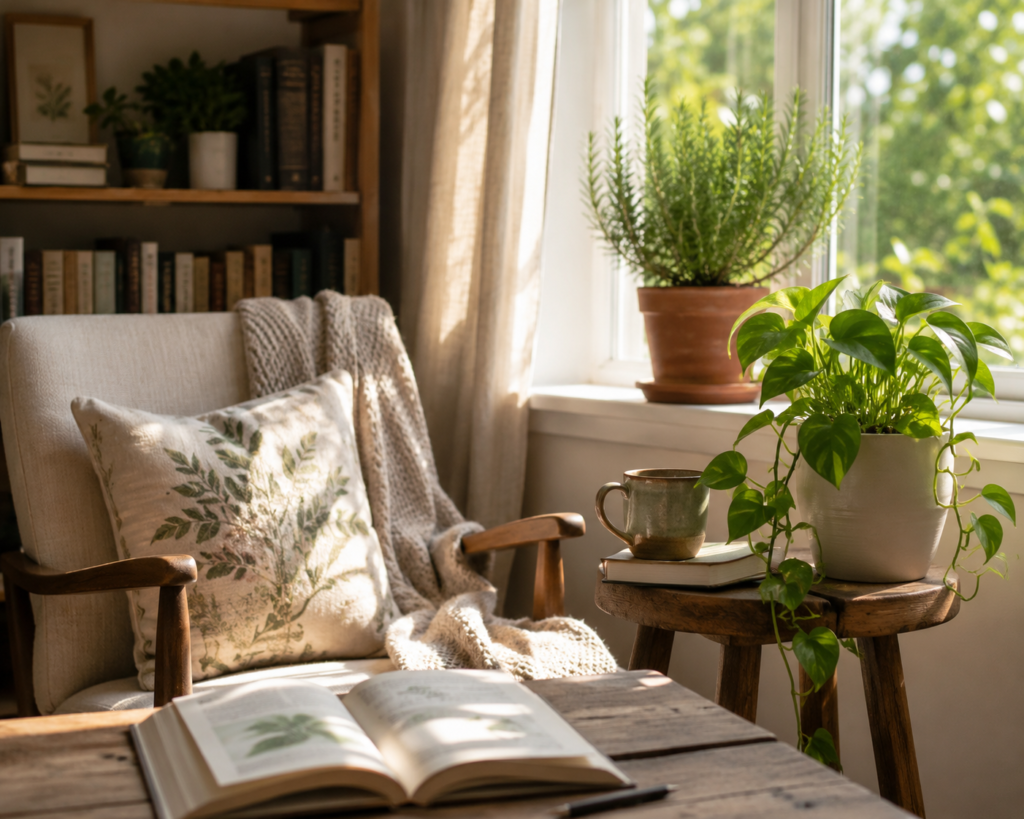
Put something green beside the chair where you read.
Place an herb near the kitchen window.
Grow flowers near the place where you drink your morning coffee.
Suddenly there is something living there.
Something changing.
Something that looks different today than it did three weeks ago.
Plants soften rooms.
They create visual interest.
And perhaps most importantly, they invite attention.
You begin noticing the sunlight.
You notice when the season shifts and the light no longer reaches the same corner.
You notice new growth.
You notice the first flower.
Those are tiny observations.
But life is largely made of tiny observations.
Herbs Make the Relationship Even More Personal
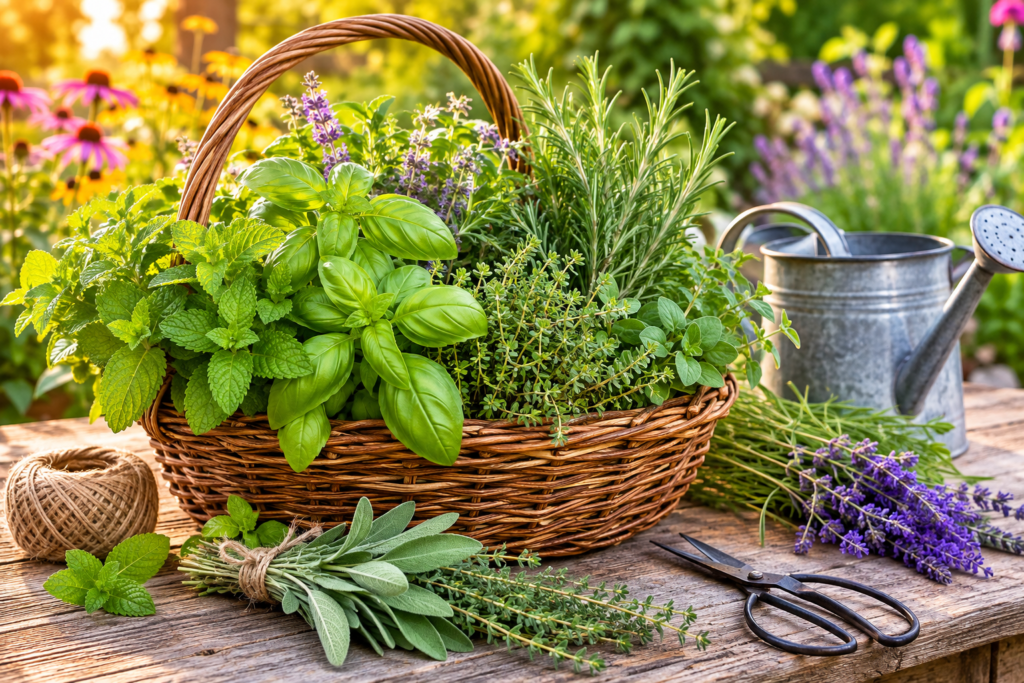
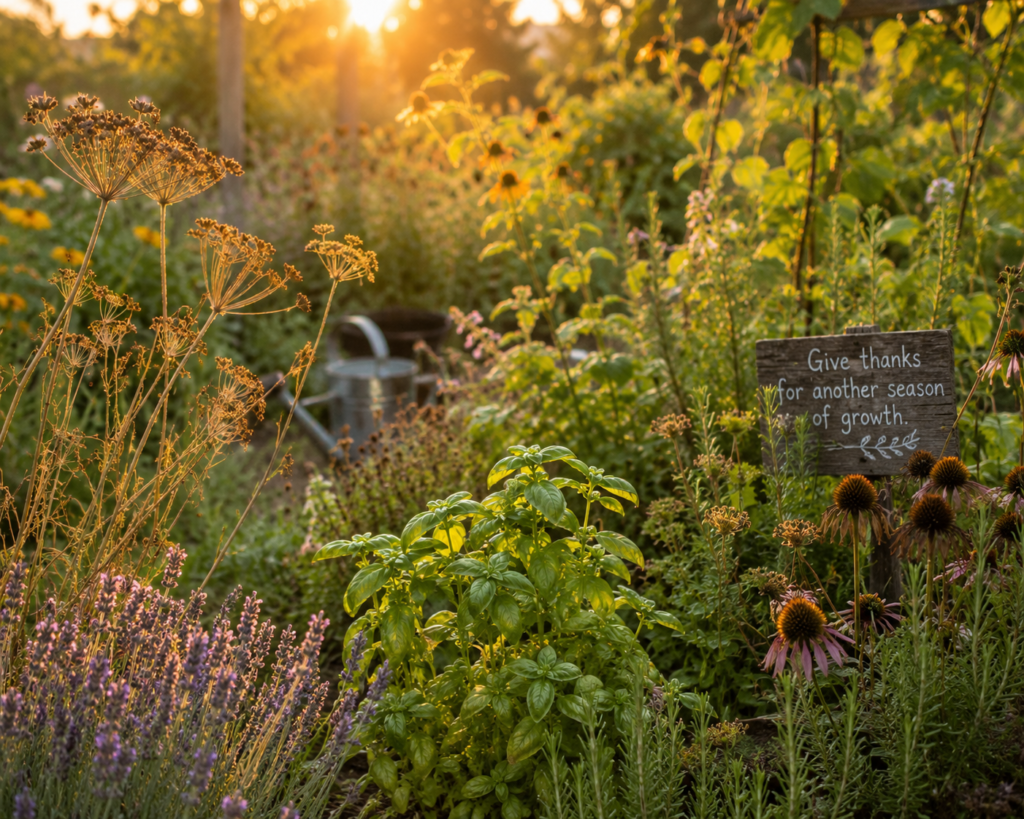
Growing culinary herbs is one of my favorite ways to introduce someone to plants.
Herbs are wonderfully interactive.
You don’t simply look at them.
You smell them.
You touch them.
You harvest them.
You cook with them.
Sometimes you dry them.
Sometimes you steep them.
And slowly, you begin recognizing the personality of the plant.
Rosemary wants different care than basil.
Mint has absolutely no respect for property boundaries if you let it loose in the garden.
Lavender has opinions about drainage.
Basil will sometimes announce that it is thirsty with great drama and then recover surprisingly quickly.
Plants become familiar.
That familiarity is especially important when we begin learning about herbal traditions.
Before asking what a plant is “good for,” I encourage people to learn something about the plant itself.
What does it look like?
How does it grow?
What part of the plant is traditionally used?
How does it smell?
What season does it prefer?
What makes it thrive?
Herbalism should begin with a relationship with plants—not simply a list of symptoms and remedies.
Growing Food Can Reconnect Us With Eating
Food changes when you grow even a little of it.
A tomato isn’t simply something that appeared at the grocery store.
You watched the flower.
Then the tiny green fruit.
Then you waited.
And waited.
And checked it again tomorrow.
Eventually that tomato becomes ripe enough to pick.
It may be the most thoroughly supervised tomato in Texas.
And then you eat it.
That experience creates a very different relationship with food.
Even growing a few herbs can encourage experimentation in the kitchen.
Fresh basil suddenly inspires tomatoes and mozzarella.
Rosemary ends up with roasted vegetables.
Mint finds its way into tea or cold water.
The garden gives us ingredients, and the ingredients give us ideas.
Healthy choices can become considerably easier when they begin with curiosity rather than obligation.
Plants Also Teach Us About Seasons
I think this is one of their greatest lessons.
A plant doesn’t expect itself to flower twelve months of the year.
There are periods of rapid growth.
Periods of flowering.
Periods of fruiting.
Periods when leaves fall.
Periods when very little appears to be happening at all.
Yet underneath the soil, life continues.
Roots strengthen.
Energy is stored.
Preparation happens quietly.
Human beings often give ourselves much less permission to have seasons.
We expect constant productivity.
Constant improvement.
Constant energy.
Constant progress.
But life doesn’t really work that way.
There are seasons when we accomplish tremendous amounts.
There are seasons when we heal.
There are seasons when we learn.
There are seasons when we simply maintain what we have.
And there are seasons when rest is not laziness at all.
It is preparation.
Start With One Plant You Actually Like
If you’re beginning to feel inspired, I want to prevent one small problem before it starts.
Do not leave here believing that wellness now requires purchasing thirty-seven plants.
We are not doing that.
Start with one.
Choose something you genuinely enjoy.
If you love cooking, try an herb.
If you like flowers, choose something that blooms.
If you travel frequently, don’t begin with something that needs constant attention.
If you have very little light, choose a plant suited to lower-light conditions rather than trying to convince a sun-loving plant that your hallway is actually Tuscany.
The easiest plant to care for is usually the one whose needs match the environment you can realistically provide.
Before you buy it, ask a few questions:
- How much light does it need?
- How frequently does it generally need watering?
- How large will it become?
- Does it belong indoors or outdoors?
- Is it appropriate for your climate or growing conditions?
- Is it safe around the pets or young children in your household?
Then take it home and learn that plant.
You will learn considerably more by successfully caring for three plants than by becoming overwhelmed by thirty.
For the Beginning Plant Lover
This idea—helping people become comfortable with plants rather than intimidated by them—is also why I created The Power of Plants: An In-Depth Guide to the 10 Best House & Patio Plants for Beginners.
It walks beginning plant lovers through approachable choices and practical plant care so that the first experience of growing something has a much better chance of being enjoyable.
Because bringing plants into your home shouldn’t feel like acquiring another responsibility you’re afraid of failing.
It should feel like bringing a little more life into your everyday world.
Learn more:
https://longevitylife.mysamcart.com/the-power-of-plants-a-in-depth-guide/
Perhaps That Is the Real Power of Plants
Plants don’t need to perform miracles to enrich our lives.
Sometimes their contribution is quieter.
They give us something to tend.
Something to observe.
Something beautiful to look at.
Something fragrant to touch.
Something fresh to eat.
Something that changes with the seasons.
And in a world that asks us to move faster and pay attention to more things than ever before, a plant quietly asks something very different of us:
Notice me.
Perhaps, while we’re doing that, we begin noticing ourselves again too.
Health & Safety Note
This article is provided for general educational and lifestyle purposes and is not intended to diagnose, treat, cure or prevent any disease or replace individualized medical advice. Gardening and physical activities should be adapted to your abilities and health needs. When growing or using herbs, correctly identify plants and consider allergies, medications, pets, children and individual health circumstances before culinary or therapeutic use.
AI-Assistance Disclosure
This article was created with AI-assisted writing and editing support under my direction and review. The educational perspective, professional experience and final content reflect my work and philosophy through Longer Life Journey and Healing Haven Oasis.