The word keto can bring up very different reactions.
For some people, it represents better structure, fewer cravings, and a clearer way of making food choices. For others, it sounds restrictive, complicated, or simply unrealistic.
The truth is that there is no single eating pattern that works beautifully for every person.
I have personally used many lower-carbohydrate principles over the years, and what I have found most valuable is not the idea of following a diet perfectly. It is the opportunity to become more aware of what we eat, how different foods make us feel, and whether our everyday choices are actually supporting the life we want to live.
That is a much bigger conversation than simply counting carbohydrates.
What Is a Ketogenic Diet?
A ketogenic diet is a very-low-carbohydrate, higher-fat eating pattern designed to shift the body toward using fat and ketones as a greater source of energy.
That is the technical description.
But in everyday life, people use the word keto rather loosely.
Some follow a very strict ketogenic diet. Others simply reduce refined carbohydrates and sugars while emphasizing protein, vegetables, and healthy fats.
Those are not necessarily the same thing.
And that distinction matters.
You do not have to adopt the most restrictive version of an eating plan in order to benefit from becoming more intentional about your food choices.
For many people, simply reducing heavily processed carbohydrates can be a meaningful first step.
Start With the Food, Not the Rules
One of the things that concerns me about many modern diets is how quickly food becomes a mathematical exercise.
How many grams?
How many macros?
How many calories?
How many carbs?
Numbers can certainly be useful, particularly when someone is following a specific therapeutic diet under professional guidance.
But food is also nourishment.
It is culture.
It is pleasure.
It is family.
It is something we do several times every single day.
So before becoming consumed with numbers, I prefer to look at what is actually on the plate.
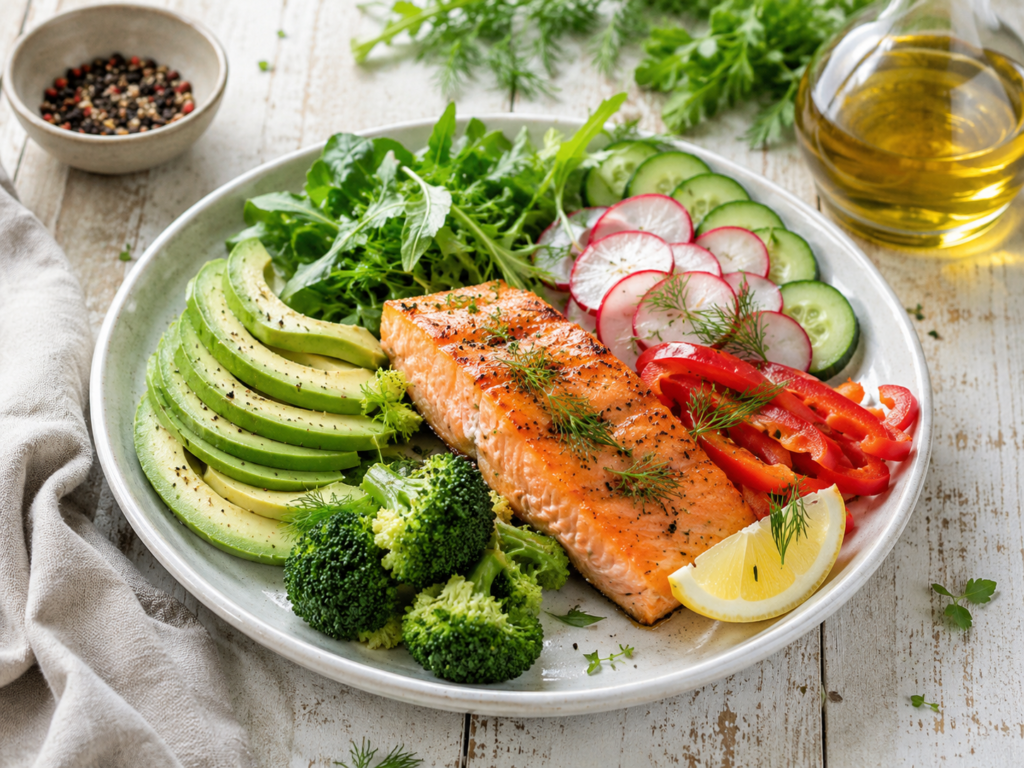
A thoughtful lower-carbohydrate meal might contain:
- A satisfying source of protein
- Plenty of non-starchy vegetables
- Healthy fats such as avocado, olive oil, nuts, seeds, or olives
- Fresh herbs and spices
- Enough food to leave you nourished rather than deprived
That is a very different mindset from trying to survive on a list of forbidden foods.
The Difference Between Whole Foods and “Keto Products”
One of the ironies of any popular eating trend is that the food industry quickly finds a way to package it.
Suddenly there are keto cookies, keto bars, keto shakes, keto cereals, keto desserts, and shelves full of products carrying the word keto in large letters.
Some can certainly be convenient.
But a label does not automatically make something nutritious.
A diet centered around packaged foods can still be highly processed, regardless of how few carbohydrates appear on the label.
I would much rather see the foundation of someone’s diet coming from recognizable foods:
Eggs.
Fish.
Meat or poultry if you eat them.
Vegetables.
Avocados.
Olives.
Nuts and seeds.
Quality oils.
Herbs.
Simple ingredients that still look like food.

Why Meal Planning Can Matter More Than Willpower
It is easy to make wonderful dietary plans at 9:00 in the morning.
Then life happens.
Appointments run late.
Someone needs you.
You are tired.
You have not prepared anything.
And suddenly the easiest food in the house becomes dinner.
That is not a character flaw.
It is simply human.
Meal planning helps because it reduces the number of decisions we have to make when we are already tired or hungry.
Even a very simple plan can answer the question:
“What are we eating today?”
That might mean planning just a few breakfasts, lunches, and dinners rather than designing an elaborate seven-day menu.
You might prepare vegetables ahead.
Cook an extra protein portion for tomorrow.
Keep eggs, greens, avocados, frozen vegetables, nuts, or other easy staples available.
The goal is not perfection.
The goal is making the healthier choice easier to reach.
Keto Is Not Automatically Right for Everyone
This is an important point.
A ketogenic diet can represent a substantial dietary change, and individual responses vary.
Health conditions, medications, digestive health, nutritional needs, activity levels, age, pregnancy, breastfeeding, and many other factors can influence whether a ketogenic or very-low-carbohydrate diet is appropriate.
Some people feel wonderful eating fewer carbohydrates.
Others do much better with a more moderate approach.
There is no virtue in forcing your body to adapt to an eating pattern simply because it is popular.
Pay attention.
Observe.
Ask questions.
And when medical conditions or medications are involved, work with a qualified healthcare professional who understands your individual situation.
You Can Learn From Keto Without Becoming “Keto”
This may be one of the most useful ideas of all.
You do not necessarily have to adopt a lifelong ketogenic diet to learn something valuable from it.
Keto encourages us to examine just how much sugar and refined carbohydrate have quietly entered modern diets.
It encourages us to think about protein.
It reminds us that fat is not automatically the enemy.
It brings vegetables, meal preparation, and ingredient awareness back into the conversation.
Those lessons can remain useful even if your long-term eating pattern is simply lower in processed foods and more centered around whole foods.
That is where I think the conversation becomes much more practical.

Look for What Is Sustainable
Whenever you consider changing the way you eat, ask yourself a few questions:
Can I realistically live this way?
Do I enjoy the foods?
Can I prepare them without turning every meal into a project?
Do I feel nourished?
Does this approach fit my health needs?
Am I learning something useful about my body?
Sustainable change rarely comes from punishment.
It usually comes from finding routines that are simple enough to repeat.
That is why I am much more interested in helping people develop workable habits than convincing everyone to follow the same dietary philosophy.
If You Would Like a Little More Structure
If you are curious about keto or lower-carbohydrate eating and would appreciate some help organizing meals, I have included a Keto Meal Plan resource in the Healing Haven Apothecary.
It is simply another tool you can explore if this style of eating interests you.
You do not need it in order to begin making better food choices, and it will not be appropriate for everyone.
But sometimes having a framework can take away the “What on earth do I eat?” problem and make a new way of eating feel far more manageable.
Explore the Keto Meal Plan through Healing Haven Apothecary if you would like additional structure and meal-planning ideas.
Most importantly, remember that your diet should serve you.
Not the internet.
Not the latest trend.
Not somebody else’s before-and-after photograph.
Your food should support your health, your energy, your enjoyment of life, and the body you actually live in every day.
That is always the bigger picture.
Health Disclaimer
This article is intended for general education and information only and is not medical advice. It is not intended to diagnose, treat, cure, or prevent any disease or to replace individualized care from an appropriately qualified healthcare professional. Very-low-carbohydrate or ketogenic diets may not be suitable for everyone. Speak with your healthcare professional before making significant dietary changes, particularly if you have a medical condition, use prescription medication, are pregnant or breastfeeding, or have individual nutritional concerns.
Affiliate Disclosure
Longer Life Journey may occasionally recommend resources that use affiliate links. If you choose to purchase through one of these links, we may receive a commission at no additional cost to you. Resources are presented as optional tools for readers to investigate and decide whether they are appropriate for their own needs.
AI Assistance Disclosure
AI tools may assist with research support, organization, editing, or content development. Final material is reviewed and shaped through the author’s professional experience, wellness education, and commitment to providing thoughtful, responsible information.