Starting a ketogenic or low-carbohydrate lifestyle can feel a little like walking into the grocery store without a list while everyone around you is speaking a different language.
Net carbs. Ketosis. Macros. Healthy fats. Electrolytes.
Before long, a person who simply wanted to make a few healthier choices may feel completely overwhelmed.
That’s the thing: changing how you eat does not have to begin with perfection. It begins with understanding what you are doing, preparing your kitchen, and having a practical plan you can actually follow.
What Is a Ketogenic Diet?
A ketogenic diet is a very-low-carbohydrate, higher-fat eating approach. When carbohydrate intake becomes very low, the body begins producing substances called ketones and using more fat as an energy source.
A true therapeutic ketogenic diet can be quite strict. However, many people use the word “keto” more generally to describe a low-carbohydrate lifestyle built around:
- Non-starchy vegetables
- Eggs, fish, poultry and other protein sources
- Avocados, olives, nuts and seeds
- Olive oil and other carefully chosen fats
- Limited amounts of lower-sugar fruits
- Fewer refined carbohydrates and added sugars
Not every person needs—or should follow—the strictest version of keto. Some people may do better with a less restrictive, thoughtfully planned low-carbohydrate approach.
Why Planning Matters
Many attempts at keto do not fall apart because of a lack of willpower. They fall apart because the person is hungry, unprepared and unsure what to eat.
When there is no plan, it is easy to:
- Depend heavily on processed “keto” products
- Eat too few vegetables or too little fiber
- Rely on bacon, butter and cheese for nearly every meal
- Forget to drink enough water
- Become bored with the same few foods
- Reach for a high-carbohydrate convenience food when hunger strikes
A meal plan gives you a starting point. It can help reduce daily decision-making, simplify grocery shopping and make it easier to notice which foods work well for your body.
Keto Does Not Have to Mean Bacon and Butter All Day
One of the biggest keto misconceptions is that reducing carbohydrates automatically means filling every plate with processed meat, cheese and saturated fat.
Food quality still matters.
A more balanced low-carbohydrate plate might include:
- A generous serving of leafy greens or other non-starchy vegetables
- A moderate portion of fish, eggs, poultry or another protein
- Avocado, nuts, seeds or olives
- Olive oil, herbs, spices, lemon or vinegar for flavor
- Water or an unsweetened beverage
The American Heart Association encourages choosing minimally processed foods, fish, nuts and liquid plant oils while limiting highly processed meats and excessive saturated fat. Very-low-carbohydrate diets can unintentionally reduce fiber and increase saturated-fat intake when they are not planned carefully.
The goal is not simply to remove carbohydrates. The goal is to build meals that are satisfying, nourishing and realistic for your life.
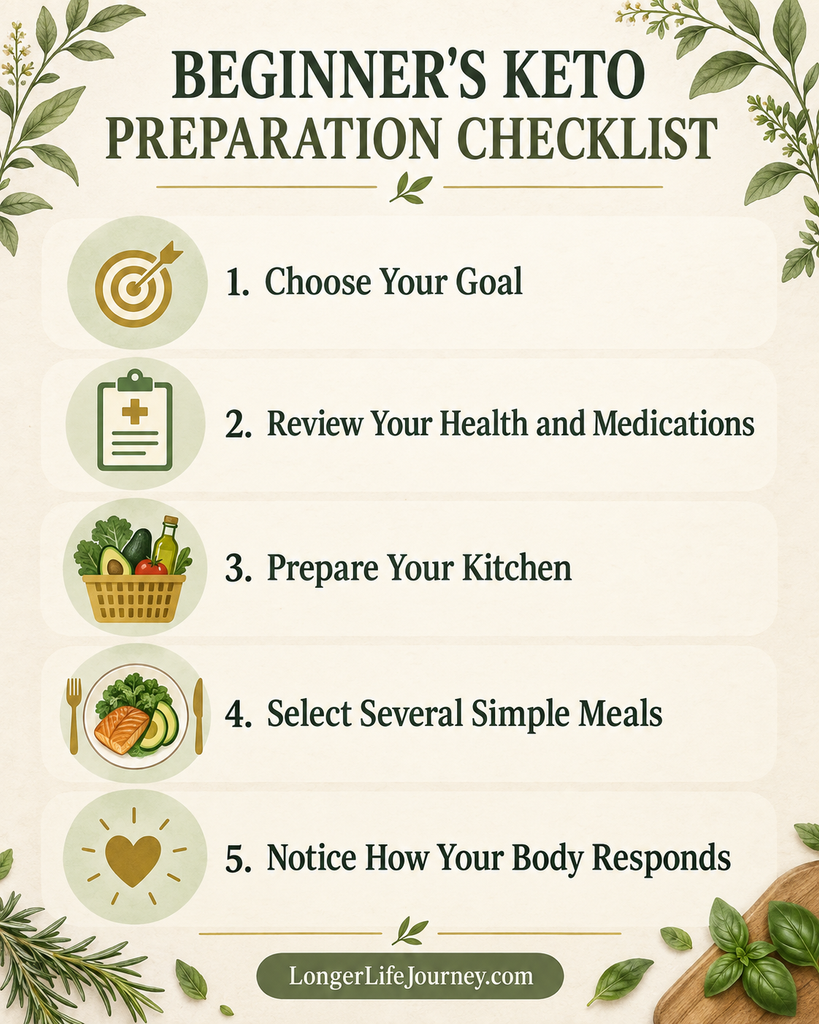
Five Steps to Take Before Beginning
1. Decide What You Want to Accomplish
Are you trying to reduce your intake of sugar and refined foods? Do you want more structure around your meals? Are you hoping to explore whether a lower-carbohydrate approach helps you feel better?
A clear, realistic reason gives your plan direction.
Try to look beyond the scale. Energy, digestion, sleep, cravings, mood and how your clothes fit can also provide useful information.
2. Review Your Health and Medications
A ketogenic diet is not appropriate for everyone.
Please speak with a qualified healthcare professional before making a major dietary change if you:
- Have diabetes or take medication that affects blood sugar
- Take blood-pressure medication
- Have kidney, liver, pancreatic or gallbladder disease
- Are pregnant or breastfeeding
- Have a history of an eating disorder
- Have experienced problems with very restrictive diets
- Are being treated for a significant medical condition
Reducing carbohydrates can change blood-sugar and fluid levels. Some medications may require professional monitoring or adjustment. Do not discontinue or change prescribed medication on your own.
3. Prepare Your Kitchen
You do not need to throw away everything in the pantry.
Begin by making space for a few dependable basics:
- Eggs
- Leafy greens
- Broccoli, cauliflower, zucchini and peppers
- Avocados
- Fish, poultry or other preferred proteins
- Olive oil
- Nuts and seeds
- Herbs and spices
- Unsweetened beverages
- Simple low-carbohydrate snacks
Knowing what you will eat when you are busy, tired or hungry is far more useful than depending on motivation alone.
4. Keep Your First Meals Simple
You do not need complicated recipes for every meal.
A simple beginning could look like:
- Eggs with sautéed greens and avocado
- A large salad with salmon, chicken or boiled eggs
- Roasted vegetables with protein and an olive-oil dressing
- Lettuce wraps filled with chicken, tuna or egg salad
- Unsweetened yogurt, if appropriate for your plan, with nuts and a small portion of berries
Choose several breakfasts, lunches and dinners you genuinely enjoy. Repeat them while you become comfortable with your new routine.
5. Pay Attention to Your Body
During the early transition, some people report headaches, fatigue, cravings, digestive changes or constipation. These symptoms are sometimes casually called the “keto flu,” but feeling unwell should not automatically be dismissed as normal.
Adequate fluids, vegetables, fiber and appropriate mineral intake matter. Persistent, severe or concerning symptoms deserve medical attention.
A dietary plan should support your well-being—not become a test of how much discomfort you can tolerate.
Common Beginner Mistakes
Changing Everything Overnight
A sudden, highly restrictive change can be difficult physically and emotionally. Some people prefer a gradual reduction in sugary drinks, sweets, bread and heavily processed foods before moving into a lower-carbohydrate plan.
Eating Too Little
Trying to cut carbohydrates, fat and calories all at once can leave you tired and hungry. Meals should contain enough nourishment to feel satisfying.
Forgetting Vegetables and Fiber
Lower carbohydrate does not mean no vegetables. Non-starchy vegetables provide fiber, vitamins, minerals and a welcome variety of colors and textures.
Treating Every “Keto” Label as Healthy
Cookies, bars, shakes and packaged snacks can carry a keto label while still being highly processed. Read ingredient lists and notice how the food affects your appetite, digestion and energy.
Expecting the Same Results as Someone Else
Every body has its own history, metabolism, health concerns, medications and needs. Your progress does not need to look like anyone else’s.
Would a 30-Day Plan Make Getting Started Easier?
If you are interested in exploring keto or low-carbohydrate eating but feel stuck at the planning stage, a structured guide may help.
Keto Made Simple: A Practical Meal Plan for Low-Carb Living provides a 30-day ketogenic meal plan along with practical resources designed to make shopping and meal preparation less confusing.
Available resources include:
- A grocery-ready food list
- A ketogenic food cheat sheet
- Lower-carbohydrate food alternatives
- Keto-friendly dessert ideas
- An introductory intermittent-fasting resource
The program is intended to provide structure and ideas—not to replace individualized medical or nutritional care.
Explore Keto Made Simple at Healing Haven Oasis
Please review the complete product information and all checkout selections before purchasing. Some optional offers presented during checkout may involve a trial period followed by recurring charges.
A Final Word from Babshi
You do not have to master an entirely new way of eating in one day.
Begin with one meal. Learn what satisfies you. Notice how your body responds. Prepare for the moments when life becomes busy, because it will.
A meal plan can provide direction, but you are still the expert on your lived experience. Use structure as a tool—not as another reason to judge yourself.
You’re not failing if you need to adjust the plan. You’re learning.
And that’s the deal: the best approach is not necessarily the strictest one. It is the one that supports your health, respects your body and can be practiced in real life.
Affiliate Disclosure: Longer Life Journey and Healing Haven Oasis may receive a commission if you purchase through links in this article, at no additional cost to you. We recommend resources we believe may be helpful, but individual experiences and results will vary.
Health Disclaimer: This article is provided for general educational purposes only and is not medical advice, diagnosis or treatment. Consult an appropriately qualified healthcare professional before beginning a ketogenic diet, changing your usual eating pattern or modifying any medication.