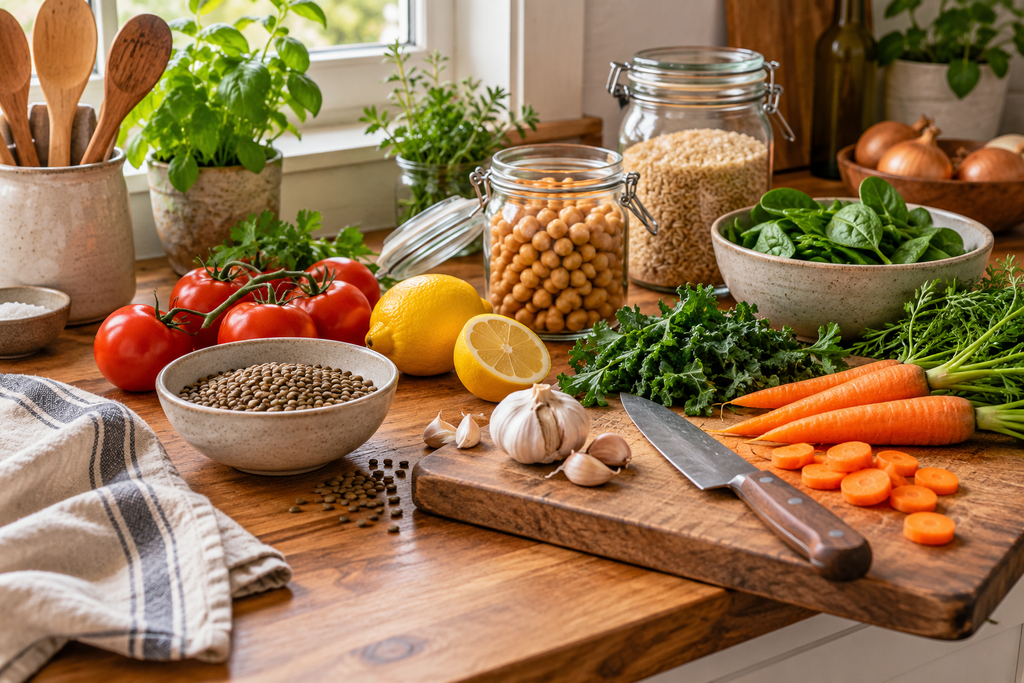
Plant-Based Cooking for Beginners: How to Make Meals You’ll Actually Want to Eat
You can be curious about plant-based cooking without being ready to change your entire diet. Maybe you want more vegetables on the table. Maybe you are looking for fresh ideas for meatless meals. Or maybe you bought a bag of lentils and would now like to know what to do with it.
Wherever you are starting, begin with food you enjoy. A satisfying dinner will teach you more than a long list of rules.
What makes a plant-based meal satisfying?
When people first try plant-based cooking, they sometimes remove the meat from a familiar meal and leave everything else the same. Then dinner feels a little unfinished.
Give the meal a new center. Beans, lentils, tofu, tempeh, nuts, and seeds are among the plant-based protein foods you can build around. Pair one with vegetables, a grain or another filling food, and flavors you like.
For example:
- A grain bowl: Rice, black beans, roasted sweet potato, greens, avocado, and lime.
- A hearty soup: Lentils, carrots, tomatoes, onion, herbs, and bread on the side.
- A familiar pasta dinner: Pasta with white beans, sautéed spinach, garlic, and olive oil.
- A loaded baked potato: Potato topped with chili-style beans and vegetables.
These are starting points, not formulas you must follow precisely. If your meal leaves you hungry, notice what might be missing. Would beans, tofu, a larger portion, or a side dish make it more satisfying?
Begin with meals you already know
You do not need a shelf of specialty ingredients to begin. Look at the meals you already make and choose one that is easy to adapt.
Taco night might feature seasoned lentils or black beans. Vegetable soup becomes more substantial with white beans. A stir-fry can include tofu and rice. Even a sandwich can become a plant-based lunch with hummus, vegetables, and something crunchy.
Keep the seasonings and flavors that make these meals yours. If your family loves smoky chili, use those familiar spices. If lemon and fresh herbs are more your style, begin there. Learning one variation of a familiar dish is often easier than learning an entirely new meal.
Build a small, useful pantry
A practical plant-based pantry does not have to be large. Choose a few items you know how to use:
- One or two kinds of beans or lentils
- Rice, oats, pasta, or another grain you enjoy
- Canned tomatoes
- A few favorite seasonings
- Nuts, seeds, or nut butter
- Frozen vegetables for days when fresh produce runs low
Fresh, frozen, and shelf-stable foods can all have a place in meal planning. Buy for the meals you are likely to make, rather than for an imagined version of yourself who cooks something elaborate every evening. We have all met that imaginary cook. She has a remarkably tidy pantry.
Pay attention to flavor and texture
Vegetables and beans can be delicious, but how you prepare them matters. Roasting brings out different flavors than steaming. A squeeze of lemon can brighten a soup. Toasted seeds add crunch to a soft grain bowl. A sauce can turn simple ingredients into a meal you look forward to eating.
If a new dish seems bland, try adjusting it before you decide you dislike the recipe. Does it need salt, acidity, herbs, spice, or something crisp on top? Small changes can make a noticeable difference.
It also helps to repeat a recipe. The first time, you are learning the steps. The second time, you can make it fit your tastes.
If you’re becoming fully vegan, plan for vitamin B12
Exploring a few plant-based meals is different from removing all animal foods from your diet. If you decide to eat fully vegan, vitamin B12 needs deliberate attention because reliable vegan sources come from fortified foods or supplements. Check labels: nutritional yeast, for example, contains added B12 only when it is fortified.
Your overall nutrition needs depend on your health, age, and circumstances. If you are pregnant, managing a medical condition, or making a major dietary change, a registered dietitian or your healthcare professional can help you make a plan that fits you.
Try one meal this week
Choose a dish you already like. Decide what plant-based ingredient could become its center. Add flavor you enjoy, and make enough to see whether you would welcome the leftovers tomorrow.
You can write down what worked: “More lime next time,” “Double the beans,” or “Keep this one.” Before long, you will have a short collection of meals that belongs to you.
That is a good beginning.
If you would like more ideas for your kitchen, explore The Inspirational Vegan Beginner’s Bundle.
By Babshi C. Spiett — nurse, herbalist, and whole-person wellness educator