Meal planning sounds wonderful until the week begins to change. Tuesday runs late. The fresh greens need using sooner than expected. You planned to cook on Thursday, but Thursday has other ideas.
A useful meal plan makes room for all of that. Its job is to help you answer “What can I cook tonight?” with the food, time, and energy you have.
Here is a simple way to plan a few plant-based meals without filling every square on a calendar.
Step 1: Look at the week ahead
Before choosing recipes, look at your actual schedule. Which evening gives you time to cook? Which one calls for a quick meal? Will you be eating at home every night?
Now choose three dinners:
- A quick dinner you can make with little preparation.
- A larger meal that will give you leftovers.
- A recipe you are curious to try.
You can repeat a favorite, use leftovers, or change plans on the other nights. The point is to reduce decisions, not create a new set of obligations.
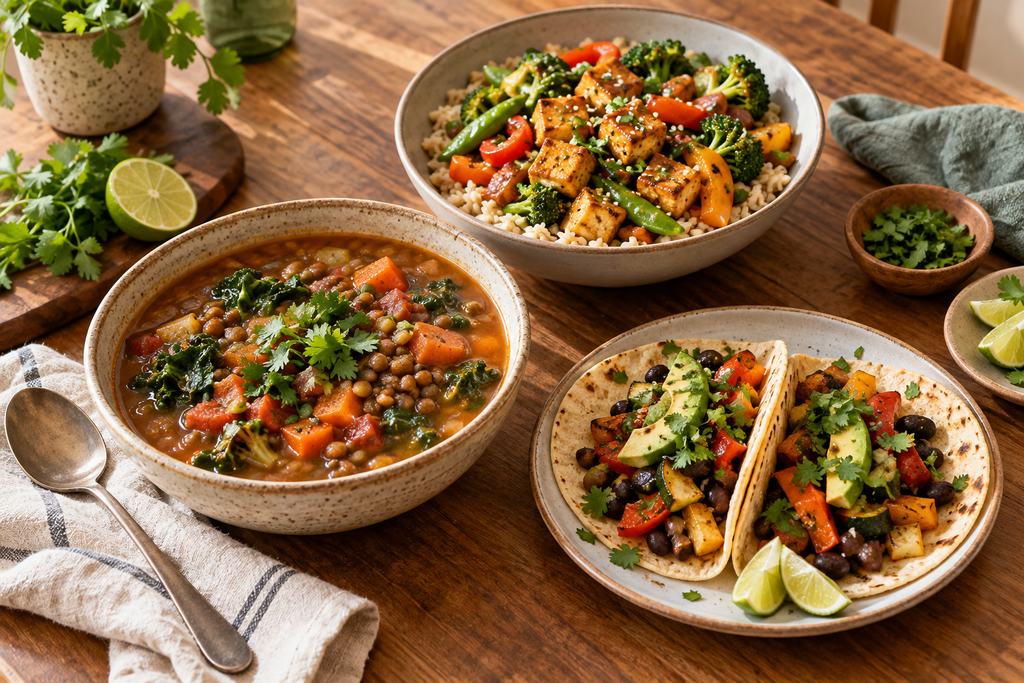
For one week, those three dinners might be bean-and-vegetable tacos, a large pot of lentil soup, and a tofu stir-fry. That is enough structure to write a shopping list and enough flexibility to move dinner around.
Step 2: Check what you already have
Open the pantry, refrigerator, and freezer before you shop. Look for ingredients that can anchor a meal:
- A can of chickpeas could become a salad, a wrap filling, or part of a warm bowl.
- Cooked rice could go with stir-fried vegetables or black beans.
- A handful of vegetables could go into soup or pasta.
- Frozen vegetables could save a meal when fresh produce is gone.
Choose at least one dinner around food you already own. Then add only the missing ingredients to your shopping list.
Step 3: Plan ingredients that can do more than one job
You do not need seven separate sets of ingredients for seven dinners. Think about what can appear in more than one meal.
Suppose you have black beans, rice, bell peppers, greens, and lime. Early in the week, they could become a rice bowl. Later, the beans and peppers could fill tacos, while the greens become a side salad.
A sauce is useful here, too. A lemon-tahini dressing, salsa, or another favorite condiment can give familiar ingredients a different feel. Use flavors your household already enjoys.
This is also a good way to try a new ingredient. If you buy tofu for one recipe, decide how you might use the rest before it disappears to the back of the refrigerator.
Step 4: Prepare one thing ahead
You do not have to spend Sunday afternoon cooking an entire week of meals. Prepare whichever single task will make your busiest day easier.
You might wash greens, chop vegetables, cook rice, mix a dressing, or make a pot of soup. Choose the step you are most likely to skip when you are tired.
If you cook extra for later, handle leftovers safely. Refrigerate perishable food within two hours of preparation, use shallow containers to help it cool, and use refrigerated leftovers within three to four days or freeze them for later.
Step 5: Keep a backup dinner
A backup meal is one you can make from ingredients you usually have, with very little thought. It might be pasta with beans and frozen vegetables, a rice-and-bean bowl, or a simple soup.
Write down two backup dinners and keep their ingredients on your regular shopping list. When a planned recipe no longer fits the evening, you still have an answer to “What can I cook?”
Here is what a flexible week could look like
Monday: Make lentil soup and set aside portions for another meal.
Tuesday: Quick bean-and-vegetable tacos.
Wednesday: Leftover soup with bread or a side salad.
Thursday: Use the backup dinner because the day ran long.
Friday: Try the tofu stir-fry you chose at the start of the week.
There is no need to assign these meals to specific days if that feels restrictive. You could simply keep the three dinner ideas on your refrigerator and choose from them as the week unfolds.
Adjust the plan after you use it
At the end of the week, ask yourself a few useful questions. Which meal was easy enough to repeat? What ingredient went unused? Did you plan for more cooking than you had time to do? Would another backup dinner help?
Keep the answers short. Meal planning improves when it reflects the way you live, cook, and eat—not the way a perfect week looks on paper.
If you would like fresh recipes and ideas to accompany that plan, take a look at The Inspirational Vegan Beginner’s Bundle.
By Babshi C. Spiett — nurse, herbalist, and whole-person wellness educator