
Have you ever looked at a holiday table and thought, “Well, there goes my healthy eating plan”?
Maybe you were doing quite well until the invitations started arriving. Then came the family recipes, the holiday baking, and that familiar feeling that you had two choices: enjoy yourself or stay on track.
That can take a lot of pleasure out of a season that is supposed to bring us together.
But there is room for a different approach.
For more festive dessert ideas, readers may wish to explore Keto Joys: Guilt-Free Desserts for Festive Gatherings. It’s an optional resource, not a guide to every guest’s health needs.
An inviting table offers choice without requiring anyone to explain their food decisions. We can make one practical dessert choice and let guests decide what works for them.
You can preserve the warmth, the flavor, and the traditions while making thoughtful changes to what you prepare and how you enjoy it.
Today, let’s talk about keto-style and lower-carbohydrate eating, what a nourishing approach can look like, and how a few simple substitutions can help you move from feeling deprived to feeling prepared.
Because the holidays still belong to you.
What do we mean by keto-style eating?
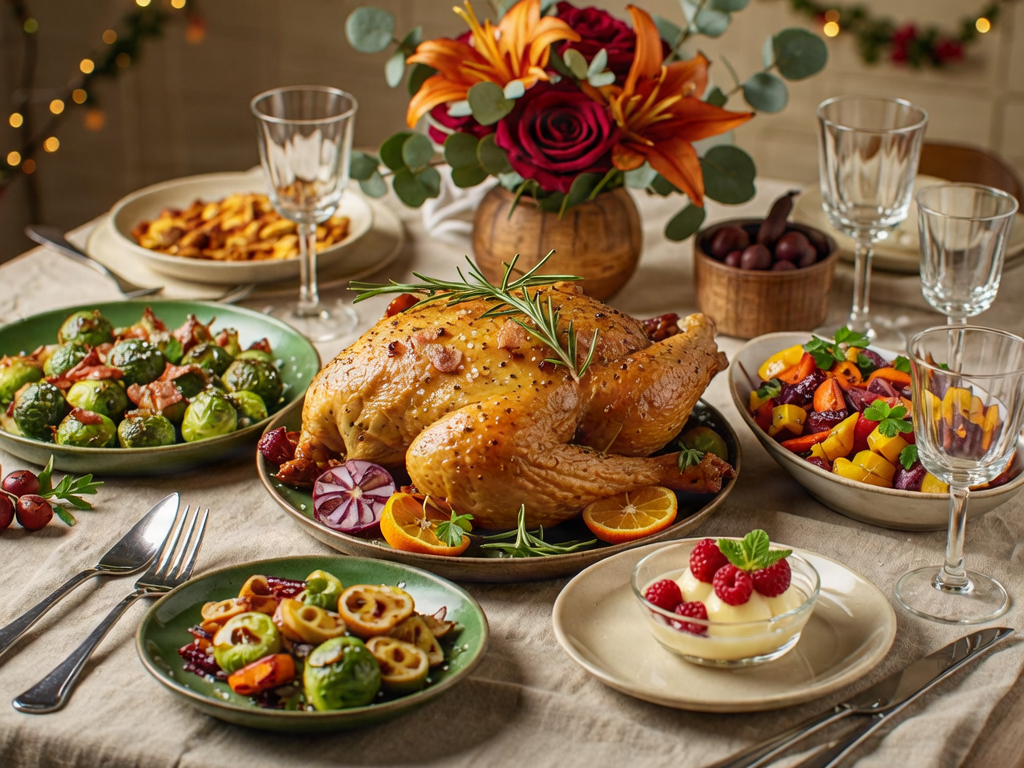
First, a little clarification.
A strict ketogenic diet reduces carbohydrates enough to encourage the body to produce ketones and use more fat for fuel. It is more restrictive than simply cutting back on added sugar or choosing smaller portions of bread and potatoes.
A lower-carbohydrate approach can be more flexible, and it does not necessarily put you into ketosis.
That distinction matters. A dessert made with almond flour is not automatically ketogenic, and one ingredient substitution does not tell us the carbohydrate content of the whole recipe.
Throughout this conversation, we’ll explore ideas that can support lower-carbohydrate preferences. If you follow a prescribed ketogenic plan, your portions and ingredient choices need to fit that individual plan.
You don’t have to chase ketosis to benefit from learning more about your food.
What are the possible benefits?

For some adults, reducing carbohydrates can help with blood glucose management or weight management.
But results vary. Keto is not the only eating pattern that can help, and it is not automatically healthier than other approaches.
The quality of the food still matters.
An eating plan built around vegetables, suitable protein foods, and mostly unsaturated fats looks very different from one built around processed meat, butter, and packaged keto snacks.
Strict keto can also make it harder to get enough fiber and a wide variety of nutrients. In some people, LDL cholesterol rises.
That’s why I encourage you to look beyond the label.
Ask yourself: Am I getting a variety of nourishing foods? Does this fit my health needs? Can I live comfortably with these choices?
An approach that helps you plan meals and reduce added sugar may be useful. But it should support your life, rather than becoming another source of pressure.
Build a Satisfying Holiday Plate

Let’s start with the meal itself.
A holiday plate can include a protein food you enjoy, a generous helping of non-starchy vegetables, and other foods in portions that suit your needs.
Think turkey, fish, eggs, or tofu. Think green beans, broccoli, cabbage, mushrooms, leafy greens, or cauliflower.
Add flavor with herbs, citrus, garlic, spices, and olive oil.
The goal is a meal you actually look forward to eating.
It can help to serve yourself deliberately instead of grazing all afternoon without noticing what you’ve had.
Sit down when you can. Enjoy the conversation. Give yourself time to taste your food.
And remember: a satisfying meal does not need to be elaborate. Familiar ingredients, prepared well, can do a great deal.
Keep the tradition; explore the ingredients
Many holiday foods carry memories.
A particular cookie may remind you of your grandmother. A pie may remind you of a kitchen where everyone gathered while something wonderful baked in the oven.
We don’t need to dismiss those connections.
Instead, ask: What do I love most about this recipe?
Is it the cinnamon? The buttery aroma? The warm fruit flavor? The ritual of baking with someone I love?
Sometimes we can preserve those qualities while changing part of the recipe.
Sometimes the original recipe, enjoyed in a portion that fits a flexible plan, is the choice you prefer.
Either way, you get to make a thoughtful decision. You don’t need to turn the whole holiday into a test of willpower.
Simple substitutions for savory dishes
For a lower-carbohydrate side dish, you might try cauliflower mash seasoned with roasted garlic and herbs.
It has its own flavor and texture. Let it be a good cauliflower dish, rather than expecting it to taste exactly like potatoes.
You might replace part of a large serving of stuffing with sautéed mushrooms or roasted vegetables.
For appetizers, consider cucumber rounds, vegetable sticks, eggs, or small portions of nuts, alongside a dip that suits your preferences.
For drinks, sparkling water with citrus can offer a festive alternative to a sugary beverage.
These choices can reduce carbohydrates, but the final result depends on the recipe and portion.
And substitutions don’t have to happen everywhere at once.
Choose one dish you’re curious about. Make it before the gathering. See whether you actually enjoy it.
That’s the thing: an enjoyable change is much easier to repeat.
Simple substitutions for holiday baking

Baking asks for a little more care.
For more festive dessert ideas, readers may wish to explore Keto Joys: Guilt-Free Desserts for Festive Gatherings. It’s an optional resource, not a guide to every guest’s health needs.
An inviting table offers choice without requiring anyone to explain their food decisions. We can make one practical dessert choice and let guests decide what works for them.
Almond flour can work beautifully in recipes designed for it. But it behaves differently from wheat flour.
Coconut flour absorbs much more liquid, so it usually cannot replace another flour cup for cup.
Start with a recipe developed for the ingredients you plan to use, rather than changing several things and hoping for the best.
If you choose a sugar substitute, check the product’s baking directions. Different blends vary in sweetness and behavior.
Some sweeteners can also cause digestive discomfort, especially in larger amounts.
And a quick reminder: honey, maple syrup, and agave still contribute sugar. Being natural does not make them carbohydrate-free.
Spices, vanilla, citrus zest, and unsweetened cocoa can add wonderful flavor. They won’t perform sugar’s structural role in baking, but they can make a thoughtfully developed recipe more appealing.
Keep portions in mind, too. A lower-carb cookie is still food with energy and ingredients to consider.
Shift from “I can’t” to “I can plan”
Now let’s talk about the mindset.
“I can’t have anything” can leave you feeling discouraged before you even arrive.
A more useful question is: “What would help me enjoy this gathering and feel comfortable with my choices?”
Perhaps you bring a dish you love.
Perhaps you look at the menu ahead of time.
Perhaps you choose the foods that matter most to you, instead of taking a little of everything simply because it is there.
Planning creates options.
You might say, “I’m bringing a dessert that works well for me. Would you like to try it?”
No lecture. No apology. Just an invitation.
You also don’t owe everyone an explanation of your eating choices.
A simple “This is what suits me today” can be enough.
Let one gathering be one gathering
One meal does not define your character or erase every helpful habit you’ve developed.
If you eat differently than you intended, pause before turning that into a judgment about yourself.
What happened?
Were you hungry because you skipped lunch? Was there nothing available that suited your plan? Did you feel pressured? Or did you simply choose a favorite food and enjoy it?
Those are different situations, and they can teach you different things.
Return to your usual routine at the next meal. You don’t need to punish yourself or compensate by skipping food.
For someone following strict keto, extra carbohydrates may interrupt ketosis. A prescribed therapeutic diet needs its own guidance.
But for a general lifestyle change, learning and returning to your habits is more useful than declaring the whole week ruined.
Habits that travel beyond the holidays
The habits you practice now can make everyday meals easier later.
Keep a short shopping list of ingredients you use often.
Find a few meals you can prepare without much effort.
Have something suitable available when you’re tired.
Alongside your food choices, make room for sleep, enjoyable movement, and time to settle your mind.
You don’t have to rebuild your whole life by Monday.
Start with one repeatable action.
Perhaps it’s preparing vegetables for tomorrow’s lunch. Perhaps it’s replacing one sugary drink. Perhaps it’s trying a new holiday side dish before the big day.
Small changes give you an opportunity to practice, notice what works, and build from there.
A brief health note
Strict keto is not appropriate for everyone.
If you take diabetes medication, speak with your prescribing clinician before making a major carbohydrate reduction. Your medication may need adjustment.
Very-low-carbohydrate plans should be avoided with SGLT2 medicines because of the risk of ketoacidosis.
Pregnancy, breastfeeding, kidney disease, and a history of disordered eating are also reasons to get individualized advice rather than starting strict keto on your own.
This video offers general education. It cannot determine the right eating plan for your medical needs.
A little holiday inspiration
If you would like a warm, practical starting point, my digital ebook, Keto Joys: Guilt-Free Desserts for Festive Gatherings, is available through Healing Haven Oasis.
This twelve-dollar holiday teaser brings together ingredient guidance, festive baking inspiration, and three sample dessert recipes.
After checkout, you’ll also have the option to purchase Keto Joys: The Holiday Recipe Collection at its introductory price of fourteen dollars and ninety-seven cents.
That separate digital ebook includes keto-style appetizers, mains, sides, and desserts for seven celebrations, from New Year’s through Christmas.
The recipe collection ebook is available now. Its print edition will follow later.
You’ll find the link in the video description.
Closing
Healthy habits can make room for warmth, creativity, and celebration.
You can experiment with ingredients. You can prepare something delicious. You can choose an approach that fits your needs and still take your place at the holiday table.
Start with one substitution, one recipe, or one small habit.
See what works for you.
And if you’d like to share, tell me in the comments: Which holiday dish would you most like to adapt?
I’m Babshi, and this is Healing Haven Oasis.
Here’s to a little holiday sweetness, a little less pressure, and traditions you can enjoy in your own way.
For more festive dessert ideas, readers may wish to explore Keto Joys: Guilt-Free Desserts for Festive Gatherings. It’s an optional resource, not a guide to every guest’s health needs.
An inviting table offers choice without requiring anyone to explain their food decisions. We can make one practical dessert choice and let guests decide what works for them.
“AI tools assisted with portions of the writing and editing. Any AI-generated food illustrations are illustrative and do not necessarily show tested recipe results. AI assistance does not verify recipe performance or nutrition.”